Missing teeth can affect more than your appearance. You might avoid certain foods because chewing has become difficult, feel self-conscious in photographs, or catch yourself covering your mouth when you laugh. Over time, these small adjustments can become part of your routine, even when you'd like to feel more comfortable with your smile.
At Dublin Dental Care, we help patients explore tooth replacement options that fit their oral health, daily needs, and personal goals. Depending on your situation, treatment may include full or partial dentures, implant-retained snap-on overdentures, or fixed implant-supported restorations. We'll explain how these options differ and help you understand which approaches may be appropriate for you.
We also understand that concerns about cost, dental anxiety, or previous experiences can make it difficult to seek care. Our team takes time to listen, answer questions, and explain the process before treatment begins, so you can make informed decisions without feeling rushed.
If you're ready to explore your options, call us at (614) 932-0200 to schedule a consultation.
Tooth loss affects everyone differently. Some people are missing a single tooth, while others have several gaps that make eating or speaking less comfortable. If you've lost most or all of your teeth, you may also be trying to understand the differences between traditional dentures and implant-supported alternatives.
The good news is that you don't need to know which treatment you want before scheduling a consultation. We'll start by evaluating your oral health and learning what you'd like to improve, whether that's chewing more comfortably, achieving a more secure fit, or feeling more confident about your smile.
Full dentures replace an entire arch of missing teeth, while partial dentures replace several missing teeth when some natural teeth remain. Both options are removable and are designed to restore the appearance of your smile and improve everyday function.
The right design depends on your mouth, the condition of your remaining teeth, and how the restoration needs to fit. Your dentist will evaluate these factors and explain what you can reasonably expect from a denture.
Implant-retained overdentures attach to dental implants for additional stability compared with conventional removable dentures. They can be removed for cleaning, but the implant attachments help keep them more securely in place during everyday activities.
This option may be worth discussing if your current dentures shift or feel loose when you eat or speak. Candidacy depends on your bone health, oral condition, and treatment goals, so an evaluation is needed to determine whether implant retention is appropriate.
Fixed implant-supported restorations are designed to remain in place rather than being removed by the patient each day. Dental implants provide support for a prosthesis that replaces multiple missing teeth or an entire arch.
These restorations involve different clinical requirements, costs, and maintenance considerations than removable dentures. We'll discuss the potential benefits and limitations of each approach so you can compare them in the context of your needs.
Tooth replacement is worth exploring whether you're missing one tooth, several teeth, or an entire arch. The most appropriate option depends on your current oral health, the number and location of missing teeth, and what you want your replacement teeth to accomplish.
You may benefit from a consultation if:
For implant-supported treatment, your dentist will evaluate the available jawbone, the health of your gums, your medical history, and other factors that may influence healing. If you have experienced bone loss or gum disease, additional treatment or preparation may be needed before implants can be placed.
These concerns don't automatically rule out every option. An examination helps establish what is possible and whether traditional dentures, implant-supported treatment, or another approach may be the best fit for your circumstances.

Your first appointment is an opportunity to discuss your concerns and understand your options. We'll begin by learning about your experience with tooth loss, what has become difficult, and what you'd like to change. You can also bring questions about treatment, recovery, cost, or anything else that has made you hesitant to seek care.
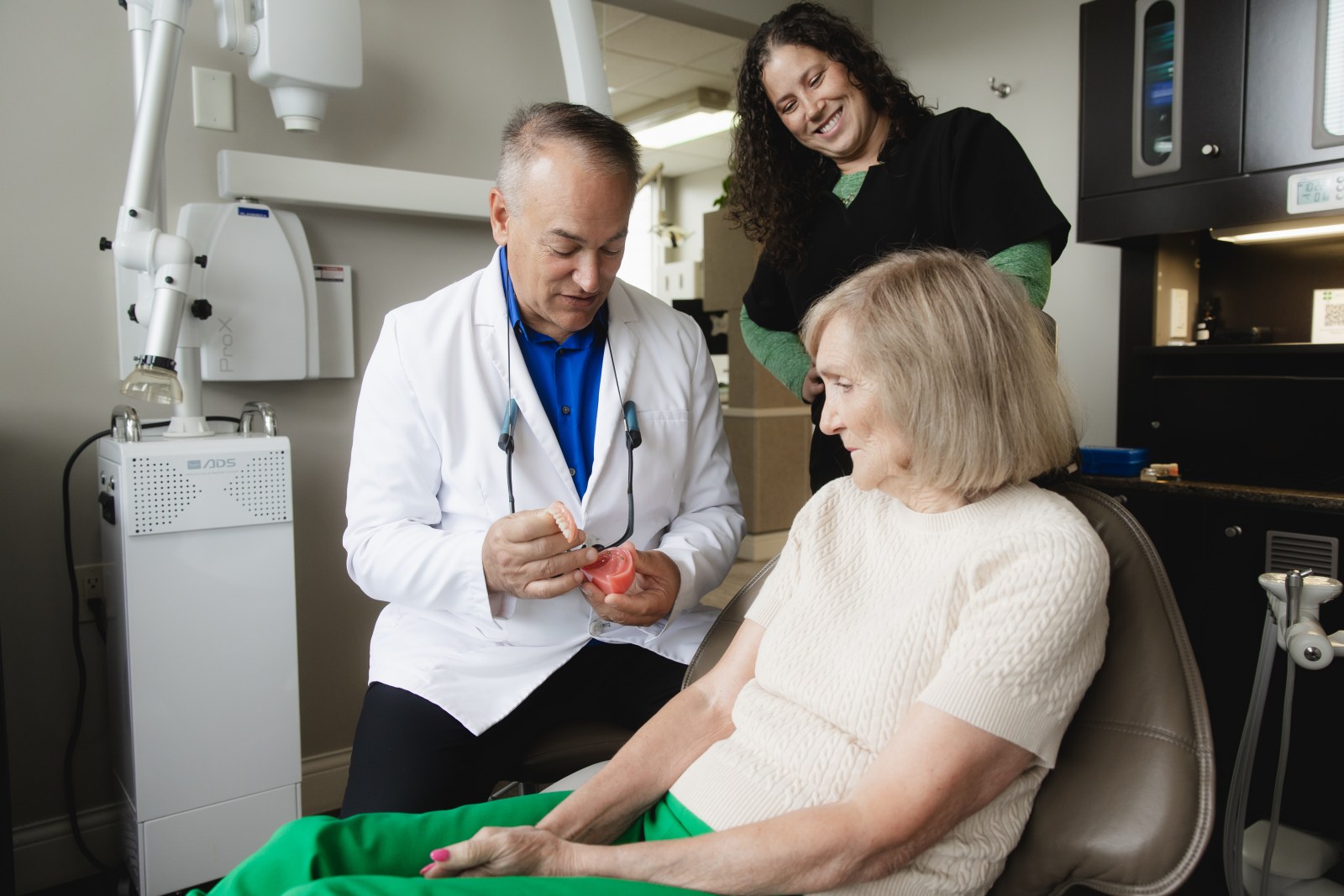
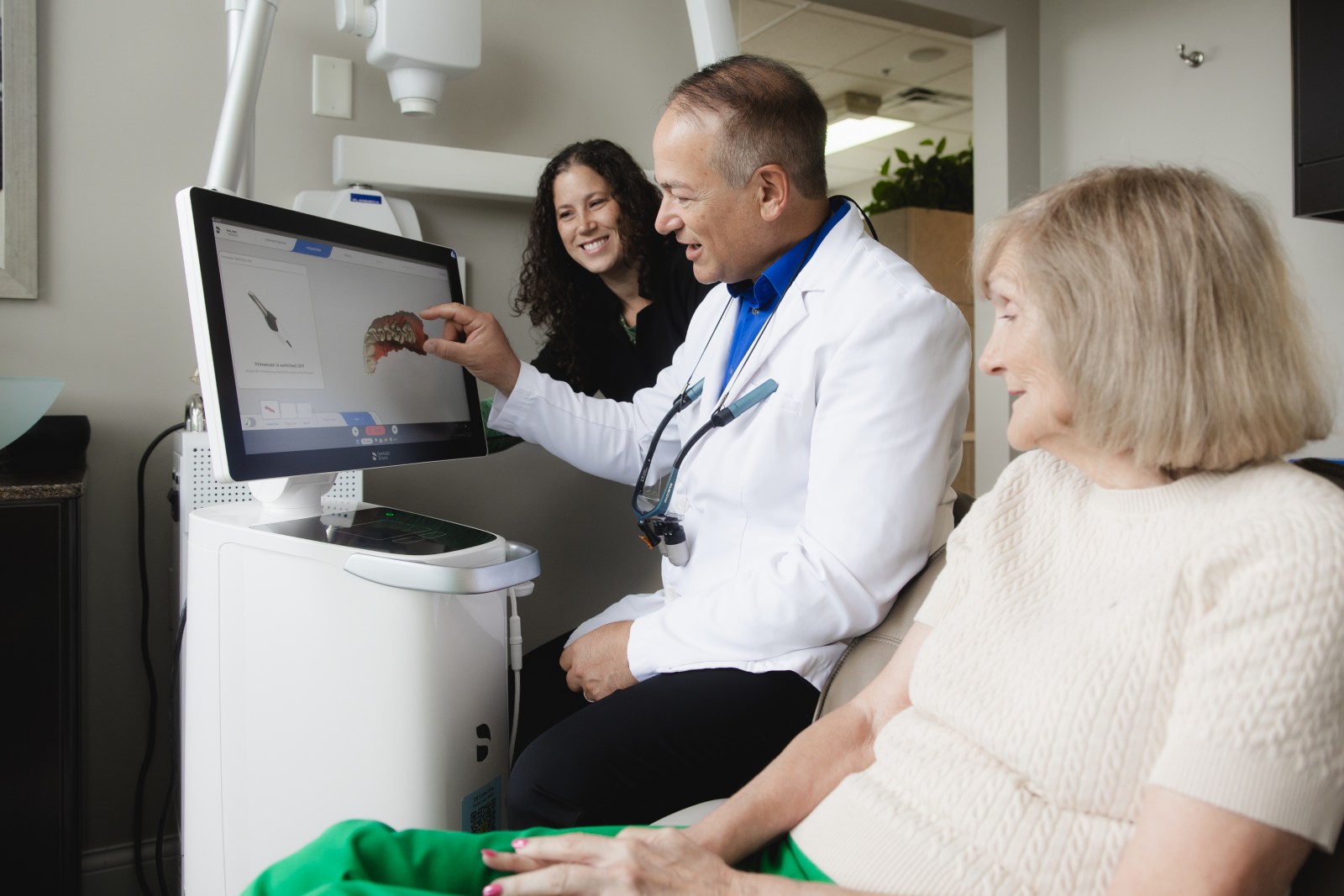
Next, we'll evaluate your oral health and determine what additional examination or imaging may be needed. Visual aids or models may be used to help explain the different restoration options and how they work. The goal is to make the information easier to understand, not to overwhelm you with unfamiliar terminology.
Once we have a clearer picture of your needs, we'll discuss the recommended approach, expected timeline, and associated costs. If more than one option is appropriate, we'll explain the differences so you can weigh the benefits and limitations of each.
Whether you're receiving conventional dentures or an implant-supported restoration, fit and comfort are important parts of the process. Your dentist will explain the steps involved in creating or fitting your restoration and what to expect as you adjust to it.
Removable dentures may need adjustments as you become accustomed to wearing them or as your mouth changes over time. If something feels uncomfortable after delivery, let us know. Follow-up care allows us to evaluate the fit and address issues that may affect your comfort or function.
Implant-supported restorations also require ongoing maintenance. We'll explain how to care for your specific restoration and why regular dental visits are important for monitoring the surrounding tissues and supporting structures.
The cost of tooth replacement depends on the type of restoration and the treatment needed to prepare your mouth. A partial denture, a full denture, and an implant-supported restoration involve different materials, clinical steps, and timelines, so an accurate estimate requires an evaluation of your individual needs.
During your consultation, we'll explain the recommended treatment and discuss the factors that affect its cost. We'll also review your insurance benefits and help you understand how your plan may apply to the proposed care. Coverage varies, so we want you to have the clearest available picture of your expected expenses before deciding how to proceed.
Financing options may be available to help spread treatment costs over time. If you're concerned about affordability, tell us. We can discuss the available options and help you understand the financial side of treatment alongside the clinical recommendations.
Our goal is to give you the information you need to make a decision that works for your health, your priorities, and your budget.
Choosing a dental practice for tooth replacement means finding a team that takes your concerns seriously and helps you understand your options. You deserve clear explanations, realistic expectations, and enough time to consider the treatment being recommended.
At Dublin Dental Care, we aim to make that process straightforward. We take time to explain our findings, answer questions, and discuss the reasoning behind treatment recommendations. If you've been avoiding dental care because of anxiety or embarrassment, you can tell us about those concerns without worrying that you'll be judged.
We also recognize that comfort can make a meaningful difference during dental visits. Amenities such as heated massage chair pads, warm blankets, and neck pillows are available, and nitrous oxide may be an option for eligible patients who need additional help relaxing.
Our practice provides care for individuals and families throughout Dublin and nearby communities, with services that address a range of dental needs. We want you to feel informed and supported from the first conversation through fitting, follow-up, and long-term maintenance.
The timeline depends on your oral health and the type of denture you need. Extractions, healing, and other preparatory procedures can add time before a final denture is ready. We'll discuss the anticipated steps and timeline during your consultation.
Dentures can be customized to complement your facial features and smile. Factors such as tooth shape, shade, and positioning help determine the appearance of the final restoration. We'll discuss your preferences during treatment planning.
It's still worth exploring your options. Depending on how your oral health has changed, you may need additional treatment before replacement teeth can be provided, but an examination can help clarify what is possible. We'll focus on your current needs rather than judging how long you've waited.
Dentures can restore chewing function, but adjusting to them takes time, and some foods may remain more challenging. Implant-supported options may provide greater stability for some patients. We'll explain the differences and help you determine which option best fits your goals.
Implant-supported dentures can offer greater stability than conventional removable dentures, but they involve additional procedures and costs and aren't suitable for everyone. Your dentist can explain the likely benefits, limitations, and maintenance requirements based on your oral health and budget.
Removable dentures need to be cleaned regularly according to your dentist's instructions, and your gums and any remaining natural teeth still need daily care. Implant-supported restorations also require careful cleaning and routine professional monitoring. We'll provide instructions specific to your restoration.
You don't need to decide on a particular type of denture or restoration before you reach out. A consultation at Dublin Dental Care gives you an opportunity to discuss what's been difficult, learn which options may be appropriate, and understand the next steps.
Call (614) 932-0200 to schedule a consultation. Dr. Roland Pagniano and Dr. Chuguo "Joseph" Liao will take the time to answer your questions and help you make an informed decision about replacing your missing teeth.
Please call (614) 932-0200 or request an appointment online to set up your first visit. We’ll be in touch soon.
